
Free shipping on orders over $400
Back

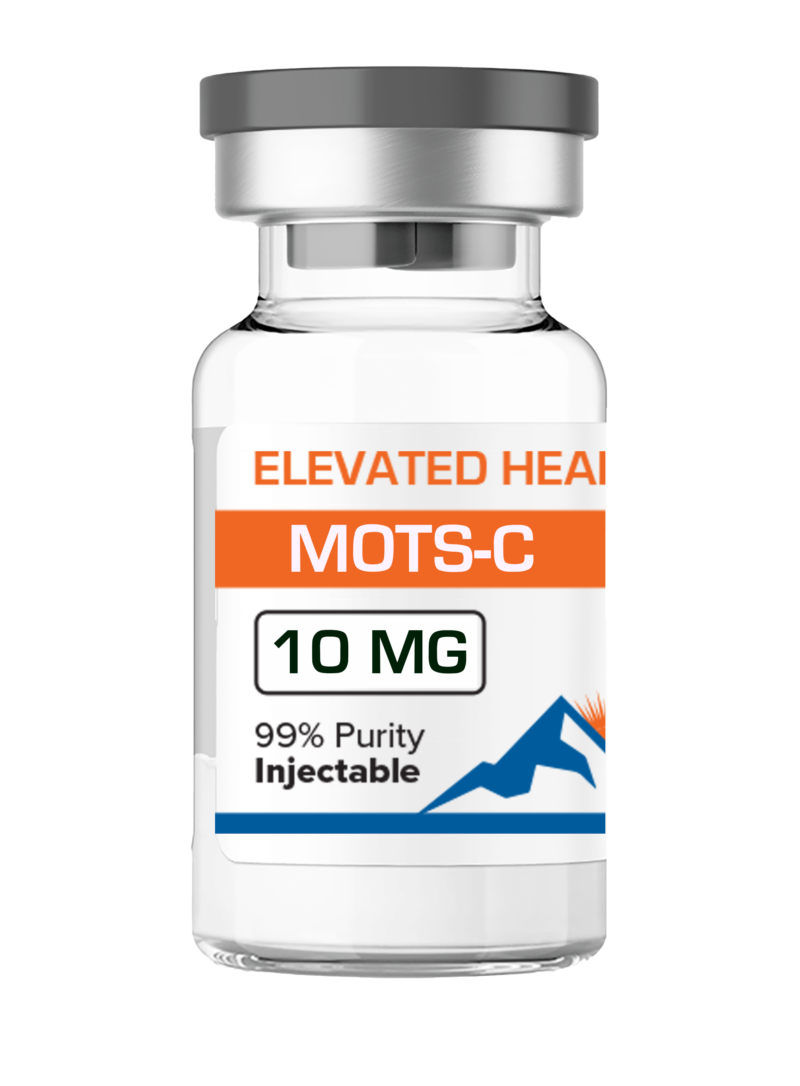
MOTS-C a unique peptide

Most peptides originate from nuclear DNA, but MOTS-c is one of the few “mitochondrial-derived peptides” (MDPs), granting it unique metabolic capabilities.

MOTS-c acts as a cellular metabolic regulator, optimizing the way mitochondria produce energy, utilize nutrients, and respond to stress. Its influence is broad, touching nearly every major system in the body, especially those involved in glucose metabolism, fat oxidation, and cellular longevity.

MOTS-C acts within the AICAR pathway, which activates the AMPK pathway which is associated with regulation of energy metabolism, improved insulin sensitivity, reduced inflammatory responses, enhanced fatty tissue activation, exercise-induced benefits, and anti-aging protection.


Overview:

  1. MOTS-C improves muscle function by enhancing glucose uptake, and boosting brown fat activity to support calorie burning and fat reduction.
  2. MOTS-C supports bone health by enhancing the survival and function of osteoblasts (bone-building cells).
  3. MOTS-C supports endothelial cell function to improve circulation, with potential downstream implications for heart health and reduced heart-related risk.


Detailed Explanation:

1. Reduces Visceral Fat

Visceral fat is metabolically dangerous and is directly linked to insulin resistance, cardiovascular disease, and inflammation. MOTS-c reduces visceral fat accumulation by shifting cells toward fatty acid oxidation rather than fat storage, particularly in the abdominal region. Studies have shown that MOTS-c can reduce diet-induced obesity, even without changes in caloric intake.


2. Improves Insulin Sensitivity

One of the most well-documented effects of MOTS-c is its ability to enhance insulin sensitivity. It increases glucose uptake in skeletal muscle and modulates key pathways like AMPK and SIRT1 both essential regulators of metabolic health. This makes it highly valuable for those with prediabetes, type 2 diabetes, or metabolic syndrome.

Research assessing MOTS-c levels in individuals with varying insulin sensitivity has revealed that the protein is associated with insulin sensitivity primarily in lean individuals. This suggests that MOTS-c may play a role in the development of insulin insensitivity rather than its maintenance. Scientists speculate that monitoring MOTS-c levels in lean, pre-diabetic individuals could serve as an early indicator of potential insulin resistance. Supplementation with MOTS-c in this population may help delay the onset of insulin resistance and the development of diabetes.


3. Boosts Mitochondrial Function

Mitochondria are the “engines” of the cell, and MOTS-c works to optimize mitochondrial function, especially during metabolic stress. By activating protective gene expression and improving energy efficiency, it helps cells adapt to challenges and resist damage.


4. Enhances Physical Performance

In both animal and human studies, MOTS-c has shown ergogenic (performance-enhancing) effects. It increases endurance, oxygen consumption, and metabolic flexibility during exercise. It can help those recovering from illness, surgery, or aging-related declines reclaim their strength and stamina.


5. Supports Healthy Aging

MOTS-c has been shown to extend lifespan and healthspan in preclinical models. It reduces oxidative stress, lowers inflammatory markers, and enhances genetic expression patterns associated with longevity. Some experts believe MOTS-c mimics the benefits of caloric restriction—a known anti-aging intervention—without the need to drastically reduce food intake.


6. Improves Metabolic Flexibility

Metabolic flexibility is the body’s ability to switch between burning carbohydrates and fats for fuel. MOTS-c enhances this capability, making it easier for your body to adapt to different energy demands and recover from stress, illness, or strenuous activity.


7. Reduces Inflammation and Oxidative Stress

By activating AMPK and reducing mitochondrial-derived ROS (reactive oxygen species), MOTS-c helps decrease chronic low-grade inflammation, one of the key drivers of aging and chronic disease


8. Counters Osteoporosis

MOTS-c appears to be involved in the synthesis of type I collagen by osteoblasts in bone. Research in osteoblast cell lines suggests that MOTS-c regulates the TGF-beta/SMAD pathway, which is responsible for osteoblast health and survival. By promoting osteoblast survival, MOTS-c enhances the synthesis of type I collagen, consequently improving bone strength and integrity.

Further research in osteoporosis has shown that MOTS-c promotes the differentiation of bone marrow stem cells through the same TGF-beta/SMAD pathway, leading to increased osteogenesis (formation of new bone). Thus, MOTS-c not only protects osteoblasts and supports their survival but also promotes their development from stem cells.


Dosage Regime:

Typical doses range from 500mcgs to 5mgs administered 1 – 7 x per week (smaller doses are used for more frequent dosing, with larger doses used for less frequent dosing).

Recommended dosage is to begin with 500mcgs 3x per week to ascertain the body’s response.  Those individuals with great metabolic disfunction will require higher doses than those individuals seeking to optimize or enhance their body’s processes

Cycle this product from 1-3 months of use, followed by 1 month of rest..


References:

  1. Kim KH et al. “MOTS-c: A novel mitochondrial-derived peptide regulating muscle and fat metabolism.” Cell Metab. 2015.
  2. Reynolds JC et al. “MOTS-c is an exercise-induced mitochondrial-encoded regulator of age-dependent physical decline and muscle homeostasis.” Nat Commun. 2021.
  3. Lee C et al. “The mitochondrial-derived peptide MOTS-c promotes metabolic homeostasis and reduces obesity and insulin resistance.” Cell Metab. 2015.
  4. Lu H et al. “Mitochondrial-derived peptide MOTS-c increases insulin sensitivity and modulates metabolism.” Cell Death Dis. 2019.
  5. Zempo H et al. “Mitochondrial-derived peptide MOTS-c activates AMPK and reduces insulin resistance in skeletal muscle.” J Physiol Sci. 2020.
  6. Després JP. Body fat distribution and risk of cardiovascular disease: an update. Circulation. 2012.
  7. Kahn SE, Hull RL, Utzschneider KM. Mechanisms linking obesity to insulin resistance and type 2 diabetes. Nature. 2006.
  8. Neeland IJ, Turer AT, Ayers CR, et al. Dysfunctional adiposity and the risk of prediabetes and type 2 diabetes in obese adults. JAMA. 2012.
  9. Garvey WT, Mechanick JI, Brett EM, et al. American Association of Clinical Endocrinologists and American College of Endocrinology comprehensive clinical practice guidelines for medical care of patients with obesity. Endocr Pract. 2016.
  10. Jastreboff AM, Kaplan RA, Frías JP, et al. Triple-hormone receptor agonist retatrutide for obesity. N Engl J Med. 2023.
  11. Lee C, Zeng J, Drew BG, et al. The mitochondrial-derived peptide MOTS-c promotes metabolic homeostasis and reduces obesity and insulin resistance. Cell Metab. 2015.
  12. Srivastava G, Apovian CM. Future pharmacotherapy for obesity: new anti-obesity drugs on the horizon. Curr Obes Rep. 2018.
  13. Lee N, Kim HK, Baek SH. Role of peptides in the treatment of obesity: a review. Front Endocrinol. 2021.
  14. Lustig RH. Fructose: it’s “alcohol without the buzz”. Adv Nutr. 2013.
  15. Bray GA. Pathophysiology of obesity. Am J Clin Nutr. 1992.
  16. L. R. Cataldo, R. Fernández-Verdejo, J. L. Santos, and J. E. Galgani, “Plasma MOTS-c levels are associated with insulin sensitivity in lean but not in obese individuals,” J. Investig. Med., vol. 66, no. 6, pp. 1019-1022, Aug. 2018. [PubMed]
  17. N. Che et al.. “MOTS-c improves osteoporosis by promoting the synthesis of type I collagen in osteoblasts via TGF-B/SMAD signaling pathway,” Eur. Rev. Med.
  18. Pharmacol. Sci., vol. 23, no. 8, pp. 3183-3189, Apr. 2019. [PubMed]
  19. B.-T. Hu and W.-Z. Chen, “MOTS-c improves osteoporosis by promoting osteogenic differentiation of bone marrow mesenchymal stem cells via TGF-B/Smad pathway,” Eur. Rev. Med. Pharmacol. Sci., vol. 22, no. 21, pp. 7156-7163, Nov. 2018. [PubMed]
  20. N. Fuku et al., “The mitochondrial-derived peptide MOTS-c: A player in exceptional longevity?,” Aging Cell, vol. 14, Aug. 2015. [Research Gate]
  21. C. Lee, K. H. Kim, and P. Cohen, “MOTS-c: A novel mitochondrial-derived peptide regulating muscle and fat metabolism,” Free Radic. Biol. Med., vol. 100, pp. 182-187, Nov. 2016. [PMC]
  22. H. Lu et al., “MOTS-c peptide regulates adipose homeostasis to prevent ovariectomy-induced metabolic dysfunction,” J. Mol. Med. Berl. Ger., vol. 97, no. 4, pp. 473-485, Apr. 2019. [PubMed]
  23. 3 K. H. Kim, J. M. Son, B. A. Benayoun, and C. Lee, “The Mitochondrial-Encoded Peptide MOTS- Translocates to the Nucleus to Regulate Nuclear Gene Expression in Response to Metabolic Stress,” Cell Metab., vol. 28, no. 3, pp. 516-524.7, Sep. 2018. [PMC]
  24. S.-J. Kim et al., “The mitochondrial-derived peptide MOTS-c is a regulator of plasma metabolites and enhances insulin sensitivity,” Physiol. Rep., vol. 7, no. 13,p. e14171, Jul. 2019. PubMed]
  25. R. Crescenzo, F. Bianco, A. Mazzoli, A. Giacco, G. Liverini, and S. lossa, “A possible link between hepatic mitochondrial dysfunction and diet-induced insulin resistance,” Eur. J. Nutr., vol. 55, no. 1, pp. 1-6, Feb. 2016. [BMJ]
  26. Q. Qin et al., “Downregulation of circulating MOTS- levels in patients with coronary endothelial dysfunction,” Int. J. Cardiol., vol. 254, pp. 23-27, 01 2018 [PubMed]
  27. Y. Yang et al., “The role of mitochondria-derived peptides in cardiovascular disease: Recent updates.” Biomed. Pharmacother. Biomedecine Pharmacother. vol. 117. p. 109075. Jun. 2019. [PubMed]
Freedom Health | Your source of Ivermectin and Anti Big pharma medications in Canada | Pill form ivermectin

Subscribe to our newsletter

Subscribe to our newsletter to receive tips, and news from our experts here at Freedom Health! Don't worry, it's not a spam-filled inbox killer!