
Free shipping on orders over $400
Back

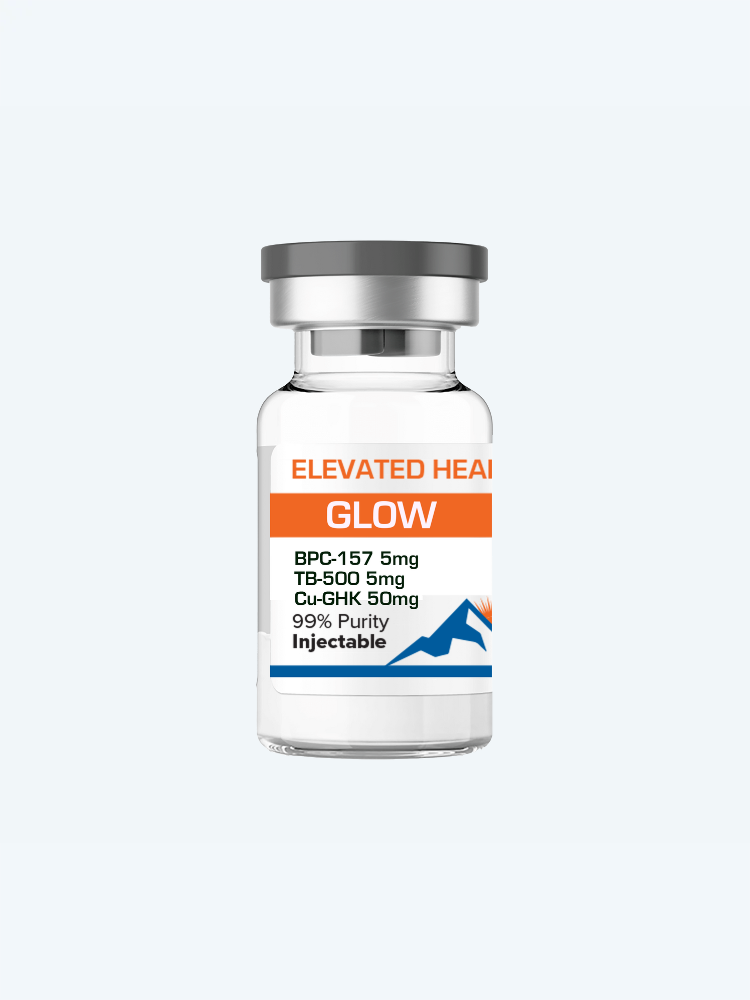
GLOW (5/5/50)

While BPC-157, TB500, and GHK-Cu share overlapping functional domains, their molecular targets and intracellular signaling pathways are distinct. The rationale for combining these peptides lies in the hypothesis that parallel modulation of nitric oxide signaling, cytoskeletal dynamics, extracellular matrix remodeling, and oxidative stress responses may produce additive or synergistic effects.
 
This Peptide blend is utilized in coordinated regulation of inflammation, angiogenesis, fibroblast activity, and cellular stress responses.


Specific Applications Include:

  • Regulation of nitric oxide and endothelial signaling pathways
  • Actin dynamics and cell migration processes
  • Extracellular matrix deposition and remodeling
  • Oxidative stress mitigation and redox balance
  • Gene expression modulation related to repair and immune signaling


Peptide Specific Actions:

BPC-157 demonstrate widespread tissue distribution and modulation of inflammatory responses across multiple organ systems. Experimental models suggest rapid peptide uptake and sustained biological activity at the tissue level.
 
TB-500 has been evaluated in diverse animal and cellular models. where it is associated with enhanced cellular migration, angiogenic signaling, and regulation of immune cell activity. Its involvement in cytoskeletal regulation positions it as a central mediator of coordinated tissue responses.
 
GHK-Cu has been investigated for its role in oxidative stress control, extracellular matrix turnover, and gene expression modulation. Transcriptomic analyses indicate broad influence over genes associated with inflammation, repair, and cellular maintenance.


Overview of Benefits of GLOW Peptide Therapy

 
The synergy of BPC-157, TB-500, and GHK-Cu in one injection yields a broad spectrum of benefits:
 
1. Accelerated Healing
Ideal for those recovering from surgery, sports injuries, or orthopedic trauma, GLOW speeds up tissue repair particularly in tendons, ligaments, and muscles.
 
2. Anti-Inflammatory Action
All three peptides have strong anti-inflammatory properties, helping reduce systemic inflammation, joint pain, and localized swelling.
 
3. Skin Rejuvenation
GHK-Cu has clinically demonstrated improvements in skin firmness, elasticity, and tone. Users often report smoother, younger-looking skin within 30 days.
 
4. Joint and Fascia Support
TB-500 enhances flexibility and mobility by targeting connective tissue and reducing fibrosis in muscle fascia.
 
5. Gut Healing
BPC-157 supports intestinal healing, making GLOW an excellent adjunct for those with leaky gut, IBD, or post-surgical GI recovery.
 
6. Enhanced Collagen Synthesis
GHK-Cu and BPC-157 stimulate collagen and elastin, helping strengthen tissue and reverse signs of aging or injury.
 
7. Hair Regrowth
GHK-Cu is being investigated for hair follicle stimulation, especially when combined with microneedling or PRP.


Details of Benefits of GLOW Peptide Therapy

Angiogenesis and Vascular Formation

BPC-157 demonstrates a unique mechanism by upregulating VEGFR2 expression without affecting VEGF-A levels. This unusual pathway activates the VEGFR2-Akt-eNOS signaling cascade in vascular endothelial cell cultures.

GHK-Cu increased VEGF and bFGF expression by 230% in irradiated human dermal fibroblasts at nanomolar concentration. Liposomal delivery systems showed 33.1% increased HUVEC proliferation rates with enhanced expression of cell cycle proteins.

TB-500 acts as a potent endothelial cell chemoattractant, stimulating 4-6-fold increases in HUVEC migration. The peptide’s seven amino acid sequence LKKTET shows activity at approximately 50 nanomolar concentration.


Tissue Repair and Regeneration

The actions of the GHK-Cu peptide include modulating 31.2% of human genes (4,192 genes) with ≥50% expression changes. The peptide binds to integrin-linked kinase on cell membranes, activating ILK-related pathways.

BPC-157 promotes tissue regeneration through FAK-paxillin pathway activation. This mechanism dramatically increases phosphorylation of focal adhesion kinase and paxillin proteins without changing total protein amounts.

TB-500’s regenerative effects stem from G-actin sequestration activity—binding monomeric G-actin in a 1:1 ratio. Rat wound healing models demonstrated 42-61% increased reepithelialization with enhanced collagen deposition.

 
Collagen Synthesis and Extracellular Matrix

GHK-Cu stimulates collagen synthesis at picomolar to nanomolar concentrations. The peptide increased decorin production by 302% and stimulated glycosaminoglycan accumulation in skin fibroblasts.

BPC-157 enhances collagen formation across multiple tissue types in animal models. Studies show significantly increased collagen, reticulin, and blood vessel formation[9].

TB-500 demonstrates anti-fibrotic properties while promoting organized collagen deposition. Treated wounds show tightly organized mature collagen fibers with reduced myofibroblast formation.

 
Inflammatory Modulation

GHK-Cu works to reduce inflammation by inhibiting NF-κB p65 and p38 MAPK pathways. The peptide decreased ROS levels and reduced production of pro-inflammatory cytokines TNF-α and IL-6 in macrophage cell cultures[2].

BPC-157 decreased TNF-α, IL-6, and IL-1β levels in tissue samples. The peptide reduced COX-2 gene expression and myeloperoxidase activity in various inflammation models.

TB-500 exhibits biphasic regulation of the inflammatory response. The peptide downregulates TNF-α (6.2-fold reduction) and IL-6 (4.1-fold reduction) while upregulating anti-inflammatory IL-10 (8.1-fold increase).


Neuroprotection and Neural Mechanisms

GHK-Cu increases production of nerve growth factor and neurotrophins NT-3 and NT-4. Delivery showed enhanced spatial memory and learning navigation in aging models.

BPC-157 demonstrates complex neurotransmitter system modulation. The peptide interacts with dopaminergic systems without directly binding to dopamine receptors.

TB-500 provides neuroprotection through anti-apoptotic effects via caspase-3 inhibition. The peptide promotes oligodendrocyte progenitor cell proliferation and differentiation through p38 MAPK upregulation.

 
Cellular Migration and Proliferation

TB-500’s G-actin sequestration represents the primary mechanism for cellular migration[7]. Local photorelease of caged TB-500 causes directional cell turning in locomoting keratocytes.

GHK-Cu acts as a potent chemoattractant for macrophages, mast cells, and capillary endothelial cells[16]. Irradiated fibroblasts treated with GHK showed growth dynamics similar to non-irradiated control cells.

BPC-157 regulates cellular migration through ERK1/2 phosphorylation[17]. Downstream transcription factors showed dramatic upregulation: c-Fos by 4.99-fold, c-Jun by 7.05-fold, and Egr-1 by 3.70-fold.


Wound Healing Mechanisms

BPC-157 demonstrates route-independent efficacy. The peptide accelerates cellular repair phases including inflammation, collagen deposition, angiogenesis, and epithelial repair.

GHK-Cu enhances wound healing through systemic effects and local tissue remodeling. Collagen dressing with incorporated GHK resulted in faster wound contraction and higher glutathione and ascorbic acid levels.

TB-500 promotes organized wound repair with anti-scarring properties. The peptide enhanced wound contraction by 11% and increased reepithelialization by 42-61% in full-thickness wound models.


Oxidative Stress Response

GHK-Cu demonstrates potent ROS reduction in cell cultures. The peptide increased superoxide dismutase activity and quenched hydroxyl and peroxyl radicals.

TB-500 provides targeted upregulation of antioxidant enzymes. Pretreatment reduced intracellular ROS levels and upregulated Cu/Zn-SOD and catalase.

BPC-157 functions as a free radical scavenger. The peptide normalizes nitric oxide and malondialdehyde levels while increasing expression of antioxidant enzymes heme oxygenase-1 and NOS-3.


Dosing Protocol
Injection Volume: 0.1mL (10 units) SubQ daily
Cycle: Daily for up to 30 consecutive days
Break: Take at least 15 days off before repeating the cycle


References:

  1. L. He et al., “Pharmacokinetics, distribution, metabolism, and excretion of body-protective compound 157, a potential drug for treating various wounds, in rats and dogs,” Front Pharmacol, vol. 13, p. 1026182, Dec. 2022, doi:10.3389fphar.2022.1026182.
  2. M. Jozwiak, M. Bauer, W. Kamysz, and P. Kleczkowska, “Multifunctionality and Possible Medical Application of the BPC 157 Peptide- Literature and Patent Review,” Pharmaceuticals, vol. 18, no. 2, Art. no. 2, Feb. 2025, doi: 10.3390/ph18020185.
  3. Y. Xing, Y. Ye, H. Zuo, and Y. Li, “Progress on the Function and Application of Thymosin B4,” Front Endocrinol (Lausanne), vol. 12, p. 767785, Dec. 2021, doi:10.3389/fendo.2021.767785.
  4. E. Lee, C. Walker, and B. Ayadi, “Effect of BPC-157 on Symptoms in Patients with Interstitial Cystitis: A Pilot Study,” Altern Ther Health Med, vol. 30, no. 10, pp. 12-17, Oct. 2024.
  5. P. Sikiric et al., “The influence of a novel pentadecapeptide, BPC 157, on N(G)-nitro-L-arginine methylester and L-arginine effects on stomach mucosa integrity and blood pressure,” Eur J Pharmacol, vol. 332, no. 1, pp. 23-33, Jul. 1997, doi:10.1016/0014-2999(97)01033-9.
  6. S. S. Iver and G. Cheng, “Role of Interleukin 10 Transcriptional Regulation in Inflammation and Autoimmune Disease,” Crit Rev Immunol, vol. 32, no. 1, pp. 23-63, 2012.
  7. G. Sosne, P. Qiu, and M. Kurpakus-Wheater, “Thymosin beta-4 and the eye: I can see clearly now the pain is gone,” Ann N Y Acad Sci, vol. 1112, pp. 114-122,  Sep 2007, doi: 10.1196/annals. 1415.004.
  8. T. Huang et al., “Body protective compound-157 enhances alkali-burn wound healing in vivo and promotes proliferation, migration, and angiogenesis in vitro,” Drug Des Devel Ther, vol. 9, pp. 2485-2499, 2015, doi: 10.2147/DDDT.S82030
  9. C.-H. Chang, W.-C. Tsai, Y.-H. Hsu, and J.-H. S. Pang, “Pentadecapeptide BPC 157 enhances the growth hormone receptor expression in tendon fibroblasts,” Molecules, vol. 19, no. 11, Art. no. 11, Nov. 2014, doi: 10.3390/molecules 191119066.
  10. T. Hara, Y. Nakayama, and N. Nara, “(Regenerative medicine of skeletal muscle!.”
  11. Rinsho Shinkeigaku, vol. 45, no. 11, pp. 880-882, Nov. 2005.
  12. Q. Zhang, L. Yan, J. Lu, and X. Zhou, “Glycyl-L-histidyl-L-lysine-Cu2+ attenuates cigarette smoke- induced pulmonary emphysema and inflammation by reducing oxidative stress pathway,” Front Mol Biosci, vol. 9, p. 925700, 2022, doi:
    10.3389/molb.2022.925700
  13. J.-R. Park, H. Lee, S.-I. Kim, and S.-R. Yang, “The tri-peptide GHK-Cu complex ameliorates lipopolysaccharide-induced acute lung injury in mice,” Oncotarget, vol. 7, no. 36, pp. 58405-58417, Sep. 2016, doi: 10.18632/oncotarget. 11168.
  14. M. Kukowska, M. Kukowska-Kaszuba, and K. Dzierzbicka, “In vitro studies of antimicrobial activity of Gly-His-Lys conjugates as potential and promising candidates for therapeutics in skin and tissue infections,” Bioorg Med Chem Lett, vol. 25, no. 3, pp. 542-546, Feb. 2015, doi: 10.1016/j.bmcl.2014.12.029.
  15. P. Sikiric et al., “Stable Gastric Pentadecapeptide BPC 157 as Useful Cytoprotective Peptide Therapy in the Heart Disturbances, Myocardial Infarction, Heart Failure, Pulmonary Hypertension, Arrhythmias, and Thrombosis Presentation,” Biomedicines, vol. 10, no. 11, p. 2696, Oct. 2022, doi: 10.3390/biomedicines 10112696
  16. L. Pickart and A. Margolina, “Regenerative and Protective Actions of the GHK-Cu Peptide in the Light of the New Gene Data,” Int J Mol Sci, vol. 19, no. 7, p. 1987, Jul. 2018, doi: 10.3390/ims19071987.
  17. M.-J. Hsieh et al., “Therapeutic potential of pro-angiogenic BPC157 is associated with VEGFR2 activation and up-regulation,” Springer Science and Business Media LLC, Nov. 2016. doi: 10.1007/s00109-016-1488-y. Available: https://doi.org/10.1007/s00109-016-1488-y
  18. Y. Dou, A. Lee, L. Zhu, J. Morton, and W. Ladiges, “The potential of GHK as an anti-aging peptide,” Ant Publishing, Mar. 2020. doi: 10.31491/apt.2020.03.014. Available: https://doi.org/10.31491/apt.2020.03.014
  19. X. Wang et al., “GHK‐Cu‐liposomes accelerate scald wound healing in mice by promoting cell proliferation and angiogenesis,” Wiley, Apr. 2017. doi: 10.1111/wrr.12520. Available: https://doi.org/10.1111/wrr.12520
  20. K. M. Malinda, A. L. Goldstein, and H. K. Kueinman, “Thymosin β            4            stimulates directional migration of human umbilical vein endothelial cells,” Wiley, May 1997. doi: 10.1096/fasebj.11.6.9194528. Available: https://doi.org/10.1096/fasebj.11.6.9194528
  21. L. Pickart and A. Margolina, “Regenerative and Protective Actions of the GHK-Cu Peptide in the Light of the New Gene Data,” MDPI AG, Jul. 2018. doi: 10.3390/ijms19071987. Available: https://doi.org/10.3390/ijms19071987
  22. C.-H. Chang, W.-C. Tsai, M.-S. Lin, Y.-H. Hsu, and J.-H. S. Pang, “The promoting effect of pentadecapeptide BPC 157 on tendon healing involves tendon outgrowth, cell survival, and cell migration,” American Physiological Society, Mar. 2011. doi: 10.1152/japplphysiol.00945.2010. Available: https://doi.org/10.1152/japplphysiol.00945.2010
  23. B. Xue, C. Leyrat, J. M. Grimes, and R. C. Robinson, “Structural basis of thymosin-β4/profilin exchange leading to actin filament polymerization,” Proceedings of the National Academy of Sciences, Oct. 2014. doi: 10.1073/pnas.1412271111. Available: https://doi.org/10.1073/pnas.1412271111
  24. F.-X. Maquart, L. Pickart, M. Laurent, P. Gillery, J.-C. Monboisse, and J.-P. Borel, “Stimulation of collagen synthesis in fibroblast cultures by the tripeptide‐copper complex glycyl‐L‐histidyl‐L‐lysine‐Cu2+,” Wiley, Oct. 1988. doi: 10.1016/0014-5793(88)80509-x. Available: https://doi.org/10.1016/0014-5793(88)80509-x
  25. S. Seiwerth et al., “Stable Gastric Pentadecapeptide BPC 157 and Wound Healing,” Frontiers Media SA, Jun. 2021. doi: 10.3389/fphar.2021.627533. Available: https://doi.org/10.3389/fphar.2021.627533
  26. K. M. Malinda et al., “Thymosin beta4 accelerates wound healing.,” Journal of Investigative Dermatology, vol. 113 3, pp. 364–8, 1999.
  27. H. Demirtaş, A. Özer, A. K. Yıldırım, A. D. Dursun, Ş. C. Sezen, and M. Arslan, “Protective Effects of BPC 157 on Liver, Kidney, and Lung Distant Organ Damage in Rats with Experimental Lower-Extremity Ischemia–Reperfusion Injury,” MDPI AG, Feb. 2025. doi: 10.3390/medicina61020291. Available: https://doi.org/10.3390/medicina61020291
  28. M. A. Evans et al., “Thymosin β4-sulfoxide attenuates inflammatory cell infiltration and promotes cardiac wound healing,” Springer Science and Business Media LLC, Jul. 2013. doi: 10.1038/ncomms3081. Available: https://doi.org/10.1038/ncomms3081
  29. L. Pickart, J. M. Vasquez-Soltero, and A. Margolina, “The Human Tripeptide GHK-Cu in Prevention of Oxidative Stress and Degenerative Conditions of Aging: Implications for Cognitive Health,” Hindawi Limited, 2012. doi: 10.1155/2012/324832. Available: https://doi.org/10.1155/2012/324832
  30. J. Vukojevic et al., “Pentadecapeptide BPC 157 and the central nervous system,” Medknow, 2022. doi: 10.4103/1673-5374.320969. Available: https://doi.org/10.4103/1673-5374.320969
  31. S. Kim, J. Choi, and J. Kwon, “Thymosin Beta 4 Protects Hippocampal Neuronal Cells against PrP (106–126) via Neurotrophic Factor Signaling,” MDPI AG, May 2023. doi: 10.3390/molecules28093920. Available: https://doi.org/10.3390/molecules28093920
  32. L. Pickart, J. M. Vasquez-Soltero, and A. Margolina, “GHK Peptide as a Natural Modulator of Multiple Cellular Pathways in Skin Regeneration,” Wiley, 2015. doi: 10.1155/2015/648108. Available: https://doi.org/10.1155/2015/648108
  33. T. Huang et al., “Body protective compound-157 enhances alkali-burn wound healing in vivo and promotes proliferation, migration, and angiogenesis in vitro,” Informa UK Limited, Apr. 2015. doi: 10.2147/dddt.s82030. Available: https://doi.org/10.2147/dddt.s82030
  34. S. Sharma, M. F. Anwar, A. Dinda, M. Singhal, and A. Malik, “In Vitro and in Vivo Studies of pH-Sensitive GHK-Cu-Incorporated Polyaspartic and Polyacrylic Acid Superabsorbent Polymer,” American Chemical Society (ACS), Nov. 2019. doi: 10.1021/acsomega.9b00655. Available: https://doi.org/10.1021/acsomega.9b00655
Freedom Health | Your source of Ivermectin and Anti Big pharma medications in Canada | Pill form ivermectin

Subscribe to our newsletter

Subscribe to our newsletter to receive tips, and news from our experts here at Freedom Health! Don't worry, it's not a spam-filled inbox killer!