
Free shipping on orders over $400
Back

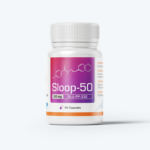
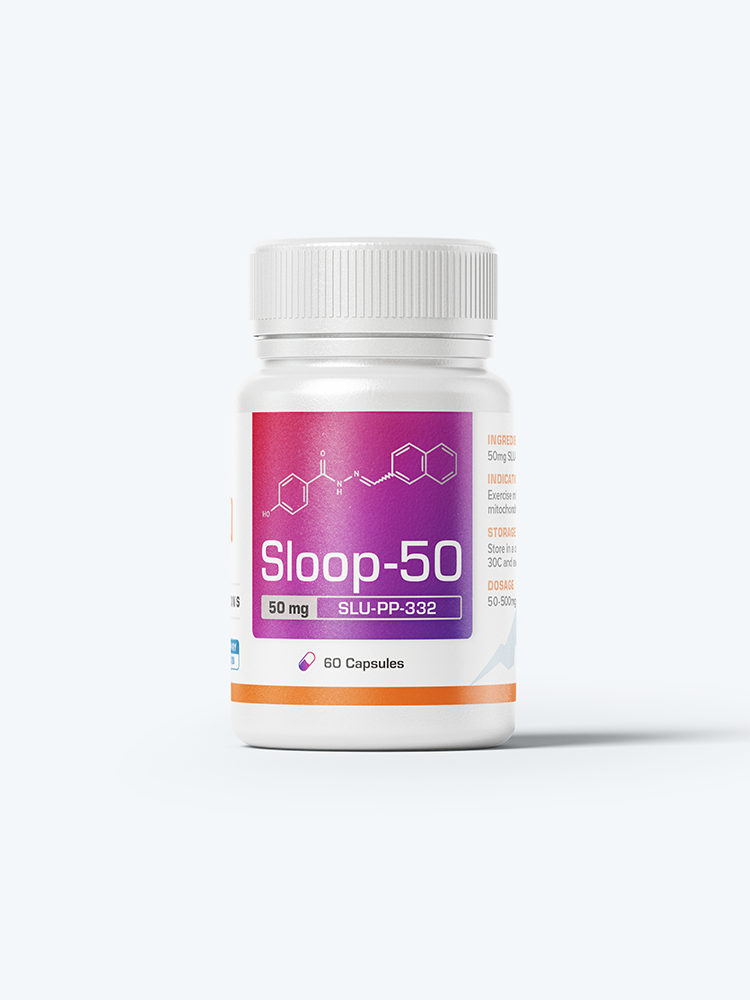
SLOOP-50

What Is SLU-PP-332?

SLU-PP-332 is a synthetic small molecule and oral peptide designed to selectively activate estrogen-related receptors (ERRs)—especially ERRα, a key regulator of energy metabolism and mitochondrial biogenesis. It belongs to a class of compounds known as exercise mimetics because it reproduces many of the metabolic and structural effects of physical activity at the cellular level.

Unlike injectables or performance-enhancing drugs, SLU-PP-332 is taken orally and does not require cycling. It’s well-tolerated, non-hormonal, and does not suppress endogenous production of any key hormone or peptide.


Mechanism of Action: Activating ERRα to Mimic Exercise

What Is ERRα?

Estrogen-related receptor alpha (ERRα) is a nuclear receptor—not directly involved in estrogen signaling—that plays a critical role in regulating:

  1. Mitochondrial biogenesis
  2. Fatty acid oxidation
  3. Glucose metabolism
  4. Oxidative phosphorylation
  5. Thermogenesis and cellular respiration

It is highly expressed in energy-demanding tissues like skeletal muscle, heart, and brown fat. When activated, ERRα turns on genes that support energy expenditure, fat metabolism, and cellular repair—functions that are naturally boosted during endurance exercise.


How does SLU-PP-332 Work?

SLU-PP-332 binds to and activates ERRα with high affinity, triggering the expression of hundreds of exercise-related genes. These include:

  1. PGC-1α: Master regulator of mitochondrial biogenesis
  2. GLUT4: Glucose transporter upregulated by insulin and exercise
  3. UCPs (uncoupling proteins): Enhance thermogenesis and energy expenditure
  4. Fatty acid oxidation enzymes: Boost lipid metabolism

The result is a broad shift in cellular energy metabolism—from storage to usage—much like what happens during aerobic training.


What are the benefits of SLU-PP-332?

1. Mimics the Effects of Aerobic Exercise

SLU-PP-332 has been shown to reproduce many of the cellular and physiological changes seen in physically trained animals. In mouse studies, SLU-PP-332 led to:

  1. Increased running endurance
  2. Improved VO₂ max
  3. Enhanced capillary density in muscle
  4. Shift toward oxidative muscle fibers
  5. Higher mitochondrial content
  6. It essentially transforms “sedentary” muscles into metabolically active, endurance-ready tissue—even without physical training.


2. Supports Fat Loss and Metabolic Health

In models of diet-induced obesity, SLU-PP-332 produced:

  1. Reduction in white adipose tissue (WAT)
  2. Lower fasting insulin and glucose
  3. Improved glucose tolerance
  4. Reversal of hepatic steatosis
  5. Reduced inflammation in liver and adipose tissue

This suggests it can be highly effective for those struggling with:

  1. Insulin resistance
  2. Fatty liver (NAFLD/NASH)
  3. Obesity
  4. PCOS and metabolic syndrome


3. Restores Mitochondrial Function

Mitochondrial dysfunction is at the root of many chronic diseases and the aging process. SLU-PP-332 has demonstrated the ability to:

  1. Increase mitochondrial density
  2. Restore oxidative phosphorylation efficiency
  3. Enhance ATP production
  4. Reduce mitochondrial DNA damage
  5. Upregulate mitophagy (removal of damaged mitochondria)

This makes SLU-PP-332 especially valuable in aging populations or anyone with chronic fatigue, fibromyalgia, or neurodegenerative risk.


4. Cardioprotective Properties

In preclinical heart failure and ischemia-reperfusion models, SLU-PP-332 has shown:

  1. Improved cardiac contractility
  2. Lower cardiomyocyte apoptosis
  3. Enhanced fatty acid oxidation in cardiac tissue
  4. Reduced pathologic remodeling and fibrosis

These findings suggest potential future use in:

  1. Heart failure with preserved or reduced ejection fraction (HFpEF / HFrEF)
  2. Cardiac ischemia recovery
  3. Post-infarct metabolic support


5. Anti-Aging and Inflammation Reduction

SLU-PP-332 suppresses age-associated inflammatory markers like:

  1. IL-6
  2. TNF-α
  3. CRP

It also supports autophagy, mitophagy, and fibrosis attenuation in organs like the liver, heart, and kidney—critical factors in aging


References

  1. H. Nasri, “New hopes on ‘SLU-PP-332’ as an effective agent for weight loss with indirect kidney protection efficacy; a nephrology point of view,” J Ren Endocrinol, vol. 10, no. 1, Art. no. 1, Jan. 2024, doi: 10.34172/jre.2024.25143.
  2. J.-S. Wattez et al., “Loss of skeletal muscle estrogen-related receptors leads to severe exercise intolerance,” Mol Metab, vol. 68, p. 101670, Jan. 2023, doi 10.1016/i.molmet.2023.101670.
  3. F. Xin, L. M. Smith, M. Susiarjo, M. S. Bartolomei, and K. J. Jepsen, “Endocrine-disrupting chemicals, epigenetics, and skeletal system dysfunction: exploration of links using bisphenol A as a model system,” Environ Epigenet, vol. 4, no. 2, p. dvy002, Apr. 2018, doi: 10. 1093/eep/dvy002.
  4. S. N. Fox et al., “Estrogen-related receptor gamma regulates mitochondrial and synaptic genes and modulates vulnerability to synucleinopathy,” pj Parkinsons Dis., vol. 8, no. 1, pp. 1-19, Aug. 2022, doi: 10.1038/41531-022-00369-w.
  5. C. Billon et al., “Synthetic ERRa/ß/y Agonist Induces an ERRa-Dependent Acute Aerobic Exercise Response and Enhances Exercise Capacity,” ACS Chem. Biol., vol. 18, no. 4, pp. 756-771, Apr. 2023, doi: 10.1021/acschembio.2c00720.
  6. J. A. Hawley, M. J. Joyner, and D. J. Green, “Mimicking exercise: what matters most and where to next?,” J Physiol, vol. 599, no. 3, pp. 791-802, Feb. 2021, doi:10.1113/JP278761.
  7. “Mimicking exercise with a pill,” American Chemical Society. Accessed: Jan. 23, 2025. [Online]. Available: https://www.acs.org/pressroom/presspacs/2024/march/mimicking-exercise-with-a-pill.html
  8. “Weight loss: Exercise-mimicking drug may reduce fat, improve insulin.” Accessed: Jan. 23, 2025. [Online]. Available: https://www.medicalnewstoday.com/articles/new-drug-may-help-lose-weight-reduce-fat-by-mimicking-exercise
  9. P.-M. Badin et al., “Exercise-like effects by Estrogen-related receptor-gamma in muscle do not prevent insulin resistance in b/db mice,” Sci Rep, vol. 6, no. 1, p. 26442. May 2016, doi: 10.1038/srep26442
  10. W. Xu et al., “Novel pan-ERR agonists ameliorate heart failure through enhancing cardiac fatty acid metabolism and mitochondrial function,” Circulation, vol. 149, no. 3, pp. 227-250, Jan. 2024, doi: 10.1161/CIRCULATIONAHA. 123.066542
  11. M. Losby et al., “The Estrogen Receptor-Related Orphan Receptors Regulate Autophagy through TFEB,” Mol Pharmacol, vol. 106, no. 4, pp. 164-172, Sep.= 2024, doi: 10.1124/molpharm. 124.000889.
  12. X. X. Wang et al., “Estrogen-Related Receptor Agonism Reverses Mitochondrial Dysfunction and Inflammation in the Aging Kidney,” Am J Pathol, vol. 193, no. 12, pp. 1969-1987, Dec. 2023, doi: 10.1016/j.ajpath.2023.07.008
  13. S. Miwa, S. Kashyap, E. Chini, and T. von Zglinicki, “Mitochondrial dysfunction in cell senescence and aging,” J Clin Invest, vol. 132, no. 13, p. e158447, Jul. 2022, doi: 10.1172/JC|158447
  14. E. Schoepke et al., “A Selective ERRa/y Inverse Agonist, SLU-PP-1072, Inhibits the Warburg Effect and Induces Apoptosis in Prostate Cancer Cells,” ACS Chem
  15. Biol, vol. 15, no. 9, pp. 2338-2345, Sep. 2020, doi: 10.1021/acschembio.0c00670.
  16. A. Rodriguez, “Not committed to fail: novel approach improves heart failure outcomes in animal model,” Baylor College of Medicine Blog Network. Accessed:
    Jan. 23, 2025. [Online]
Freedom Health | Your source of Ivermectin and Anti Big pharma medications in Canada | Pill form ivermectin

Subscribe to our newsletter

Subscribe to our newsletter to receive tips, and news from our experts here at Freedom Health! Don't worry, it's not a spam-filled inbox killer!